Object: GPS Tracker (The Dynamic Locator)
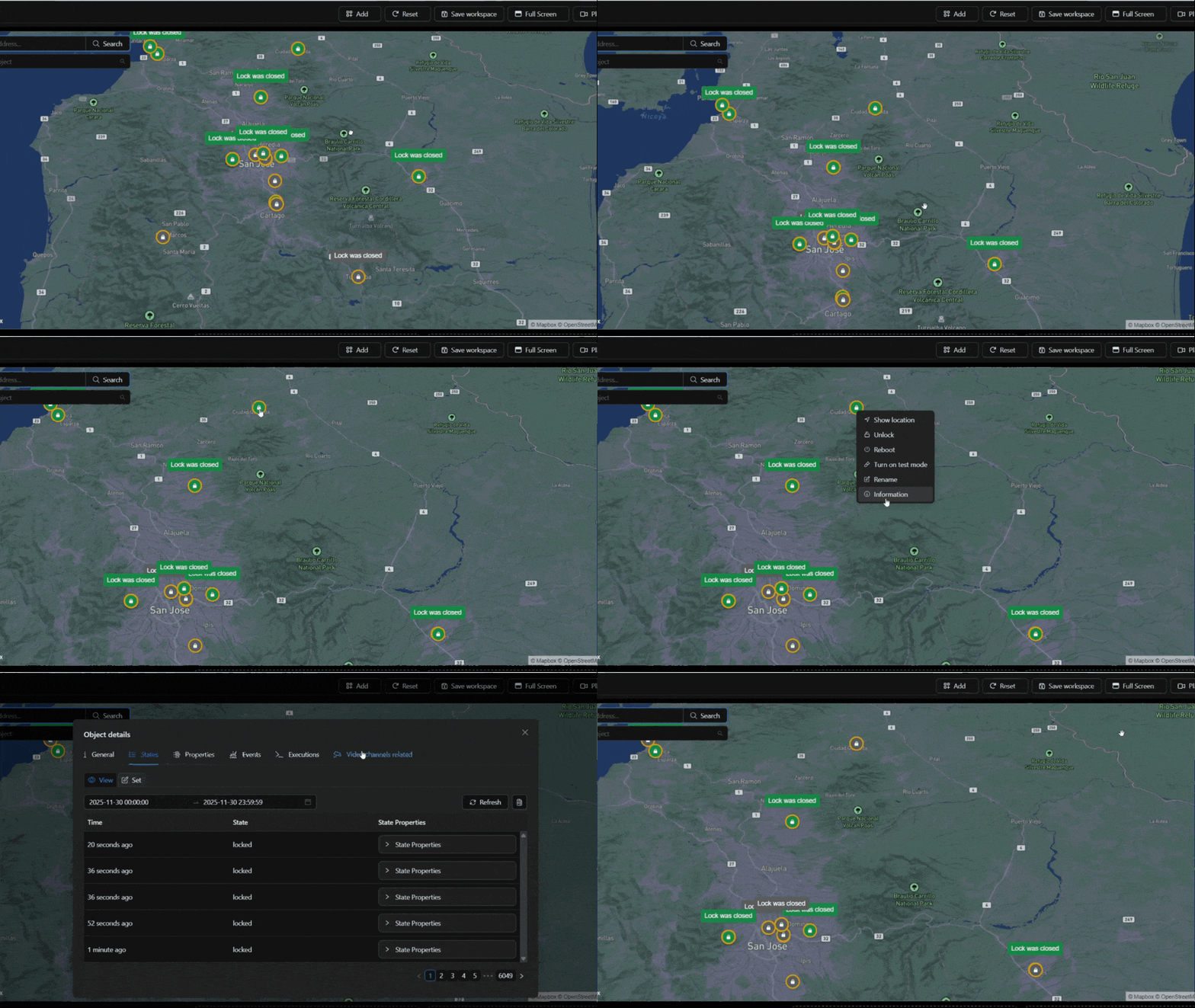
A 'GPS tracker' type object represents a device or service capable of monitoring and reporting the geographic location in real-time (or near-real-time) of assets, people, or vehicles within the Netsocs ecosystem. This object not only provides coordinates (latitude, longitude) but can also include enriched data such as altitude, speed, direction, signal accuracy, and additional device states (e.g., battery, movement, temperature).
Its functionality is critical for:
- Real-time location: Continuous tracking of vehicle fleets, valuable assets, or people in mobility.
- Geofencing: Automatic detection of entries or exits from predefined zones, with triggers for alerts or automations.
- Route optimization: Analysis of routes, stop times, and logistics efficiency.
- Security and recovery: Alerts for unexpected detours, theft, or asset loss.
- Context integration: Combining location with other data (e.g., opening garage doors when detecting vehicle proximity).
Key Point
Transforms raw geographic data into business and security intelligence,
enabling:
- 📦 Asset monitoring.
- 🚛 Fleet management.
- 🔍 Asset recovery.
States
State Properties
The value of the GPS Tracker lies in the richness of its properties:
latitude/longitude→ Exact geographic coordinates (heart of the object).speed→ Current asset speed (km/h or mph).altitude→ Elevation above sea level.battery_level→ Device battery level (if autonomous).parked→ Indicates if the device is parked or in motion. The value can betrueorfalse.
Additionally, some integrations can provide much more information; the integration manual should be consulted for more details.
Actions
View Traceability on Map
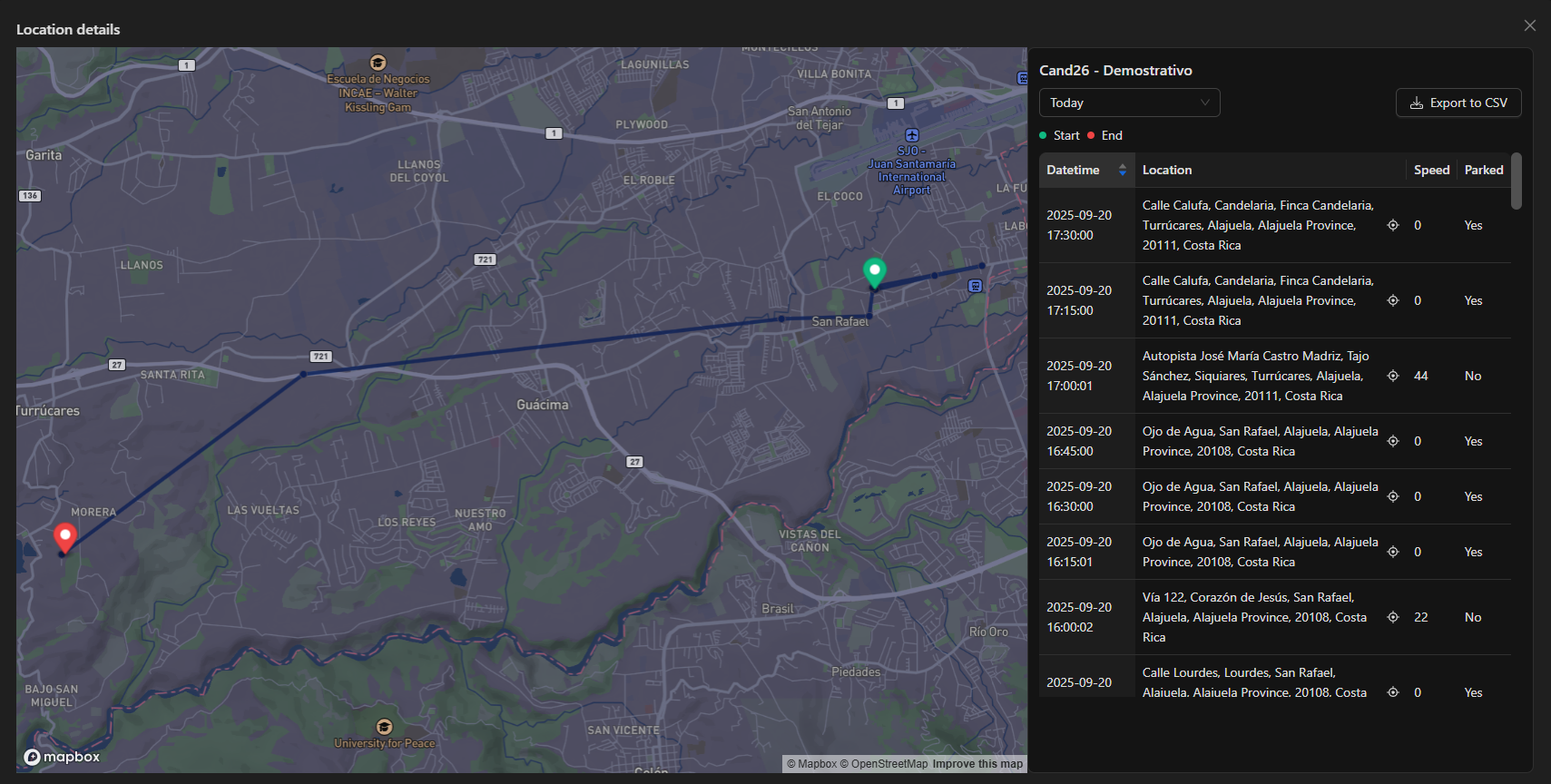
When selecting this action, a window opens with an interactive map showing:
- The current location of the device (marker).
- The route traveled in a selected period (trace line).
- Points of interest or events (additional markers).
Allows analyzing movement patterns, stop times, and habitual routes.
Note
This functionality is based on data stored in Netsocs databases, so if the object reports its location infrequently, the object is recent, or for another reason there isn't enough data, traceability may be limited or nonexistent.